


Near To The Wild Heart Of Life
Japandroids' story, let alone their worldwide success, nearly never got started. After completing their debut, Post-Nothing in 2008, the band decided to call it quits. What happened next, of course, is that the album became a cult hit, and they embarked upon a gruelling 200-date world tour to support it, playing in more than 20 countries.
After a short break from touring, 2012's 'Celebration Rock' arrived. A critical and commercial success, it was one of the most visceral and exciting guitar albums for years, and the band again played several hundred shows to support it.
Then, like a mirage, the band disappeared, leaving a short thank-you message to their fans that ended with, "y'all stay crazy/forever," a reference to the track Crazy/Forever from Post-Nothing. After a while, people stopped asking for news on what the band were doing now, and moved on.
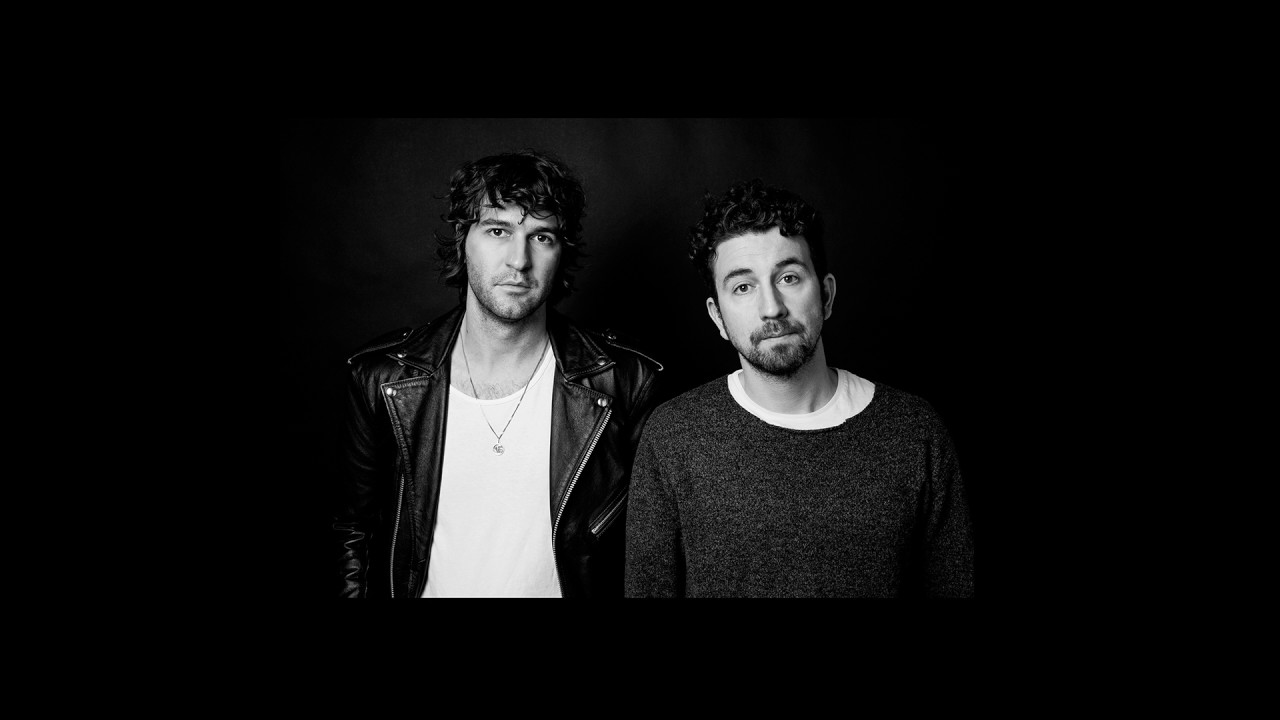
With new album, Near To The Wild Heart Of Life, landing after years of radio silence, many who assumed Japandroids had thrown in the towel are now celebrating the return of the plucky cult heroes.
Written and recorded in New Orleans, Vancouver, Toronto and Mexico City, it reflects not only a change in the band's sound, but also changes in the circumstances around the group itself.
We caught up with guitarist and vocalist Brian King to find out what makes him, his songwriting, and his rig tick ahead of what looks to be the most exciting year yet for the band.

The boys return to town
How would you describe the new album, compared with Celebration Rock?
"When we finished touring Post-Nothing, we didn't really have much money, so there was a lot of pressure to write and record a new album as quickly as possible so you could get back out on the road... it turns [touring] into something that you have to do rather than that you really want to do, and it is something that we really love to do.
"This is the first time we've ever been in a stable or comfortable position where we didn't necessarily have the same kind of pressures; we had the luxury of being able to take the time we needed to just make the record that we wanted to make."
Were there any differences in influences on your songwriting? Or perhaps things that you wanted to bring to the fore in your music?
We had the luxury of being able to take the time we needed to just make the record that we wanted to make
"When we started the band together, we were really into certain bands, certain records. We were really also into going to shows, so when we started the band we very much wanted to emulate stuff that was very raw, and very live-sounding... we were trying to make a live record in the studio.
"Once we finished Celebration Rock, we basically accomplished that. That record was the songs, the sound - it was everything we'd been trying to do basically the whole time we were in a band.
"I think there were a lot of people that wanted us to keep making Celebration Rock over and over forever. We felt that we'd nailed the thing we were trying to do, and it was time to try something else.
"The way that we created those first two records was we had a bunch of rules: we don't overdub anything, we don't have any instruments we can't actually play onstage. For this record, we just decided, let's get rid of all of those rules, and let's try and see where our imagination takes us in the writing."
What accounts for the length of time you guys have been away?
"It wasn't necessarily that we were away for so long. I think in the modern age people are used to having access constantly to the musicians or artists that they like... but we basically just chose not to do that.
"I think the great thing is, when we actually did announce this record, there was an element of surprise and excitement that came along with it, mostly because people didn't even know if we were still a band."

Continuous thunder
What guitars are you using currently?
"I've got two [Tele Deluxes], a '73 and a '75. My '73 has the original pickups... that guitar and those pickups, that's basically the Japandroids sound.
“One of those two guitars, I was having some problems with the sound... I took it in before one of our shows, and the guy opened it up and beer came out from inside the guitar! I was like, 'Oh, that's probably why it doesn't sound right.'"
How about amps? Are you still using a multi-amp setup?
"[With fly-in gigs] it's very difficult to play with gear that's consistent in any way.
"I travel with two guitars - a main and a backup - a pedalboard, and my own head, a Hiwatt Custom 100. The majority of my sound is really created by my guitar, the way I split my signal through the effects and my Hiwatt head, and everything else - cabinets, different combo amps - I'm using the same concepts with whatever I get, but those things change from show to show."
When you get the chance, for example in the studio, do you favour specific amps in your setup?
"I'm using a Radial JD7, which is a guitar splitter. I have one signal from my guitar into the splitter and then the splitter is split into four different outs.
When you mix all four amps together you basically get in theory a little bit of everything, which is the Japandroids sound
"Two outs are to combo amplifiers. One of those combos is a completely clean signal, and the second combo is very high-gain, from a Sovtek Big Muff.
"The third signal is going to the bass... typically an Ampeg SVT 8x10, and I've got a bunch of fancy EQs to remove high and mids and bring out the lows, but it's essentially getting a completely clean guitar signal exactly the same as the combo clean signal.
"The signal going to the Big Muff is being split into two - one into the combo amplifier, and one into my Hiwatt, which is going into a 4x12 cabinet. I EQ the combo amp to be pretty high, with high mids, and the Hiwatt I'm EQ'ing to be low and low mids.
"When you mix all four of those together you basically get in theory a little bit of everything, which is the Japandroids sound."
So is there anything else in particular that you've been relying on, gear-wise?
"[On the album tour] I'll be using basically that setup, but for the clean I'll be using a Roland Jazz Chorus instead of a Fender Twin.
"I started using that for my clean and I fucking loved it, and I'll be using that for my clean from now and for all time.
"I think I had in my mind, drilled into me, that tube amps are good and solid-state amps suck, but for just a clean guitar tone..."

Home truths
Speaking of live, we've noticed you always have a photo stuck to your guitar - what's the story behind that?
"It started by accident in that we started touring more and more, and being away from home and doing longer tours further away, so I started carrying a lot of family photos.
"One night, when we were playing, I just felt particularly homesick or particularly down, so I started putting them somewhere on stage where I could see them... then one day I put one on my guitar, and it became a constant reminder of home and my family and the people that are important to me."
How have you adapted your playing to being in a two-piece?
All of Celebration Rock I wrote in E specifically for the purpose of not having to change tunings during the set... and I never looked back
"The one thing about a lot of the bands that we love and wanted to emulate [in the classic rock, rock and Americana spheres], is they typically have a bass player and two guitar players.
"I wanted to have a rhythm part and a lead part at the same time, just like those bands did, but it's impossible.
"I learned how, at least in my own way, to kind of fudge that. Like, to put the lead parts in the chords as I play them and just try and give you the impression that you're kind of listening to a rhythm part and a lead part at the same time, so that element of our songwriting has just been more and more refined over time."
To expand on what you were saying there, has this dynamic meant changing, for example, tunings or equipment used?
"In the beginning, I would say tuning was equally split between E and [drop] D. A lot of the touring for Post-Nothing, we did just the two of us; I mean, Dave and I did an entire tour of North America with just two of us in an SUV.
"In the middle of the shows, depending on how we made the setlist, I was constantly having to tune back from D to E. It had a certain drag on momentum, so when it came to writing Celebration Rock, as I was getting better at just playing in standard E... so all of Celebration Rock I wrote in E specifically for that purpose, of not having to change tunings during the set... and I never looked back."
Final question - what do you love about music, Brian?
"It's almost like I don't know, but I just do. [Long pause] There's some kind of power and freedom that I find in it that I don't know I can honestly say that I find in anything else in this world, both in terms of listening to music and actually playing music. It's an uncontrollable attraction, I guess you could say."
Near To The Wild Heart Of Life is out on 27 January via Anti-.
