
MusicRadar Verdict
It’s not often you’ll hear the words ‘Teenage Engineering’ and ‘decent price’ in the same sentence, but here we are. Riddim and Ting is a novel, sweet and flexible package from TE that might be narrow-ish in focus but is superb fun nonetheless.
Pros
- +
Great sounds and projects
- +
Lovely effects for live performances
- +
Decent price (with mic included)
Cons
- -
Narrow focus, although not as narrow as Medieval
- -
Mic might not be free forever, so grab it quick
MusicRadar's got your back Our team of expert musicians and producers spends hours testing products to help you choose the best music-making gear for you. Find out more about how we test.
What is it?
Hardware sound modules and software titles aimed at specific genres of music are by no means new – just look back at the evolution of the groovebox from Roland, Yamaha and Korg right up to the latest modules from Akai, Novation and NI to understand how dance music has shaped the music equipment industry.
Companies like Sonicware produce competitively-priced hardware for other specific tastes – ambient, lo-fi, you name it – and sample-packed ROMplers from the likes of, well, everyone, will tailor to any desktop flavour.
Routes specifically for dub and reggae creation are thinner on the ground, although many delay and sub bass synths are capable of producing the necessary deep and mesmerising low-end backbones and repeating effects.
However, no module has worn its aim so proudly as Teenage Engineering’s latest EP-40 Riddim, which not only provides sirens, delays and deep, deep basses, but partners with its own lo-fi effect microphone, the EP-2350 Ting. You get, then, all the low frequencies, all the effects and all the beats you need for reggae, dancehall and dub… and more genres besides.
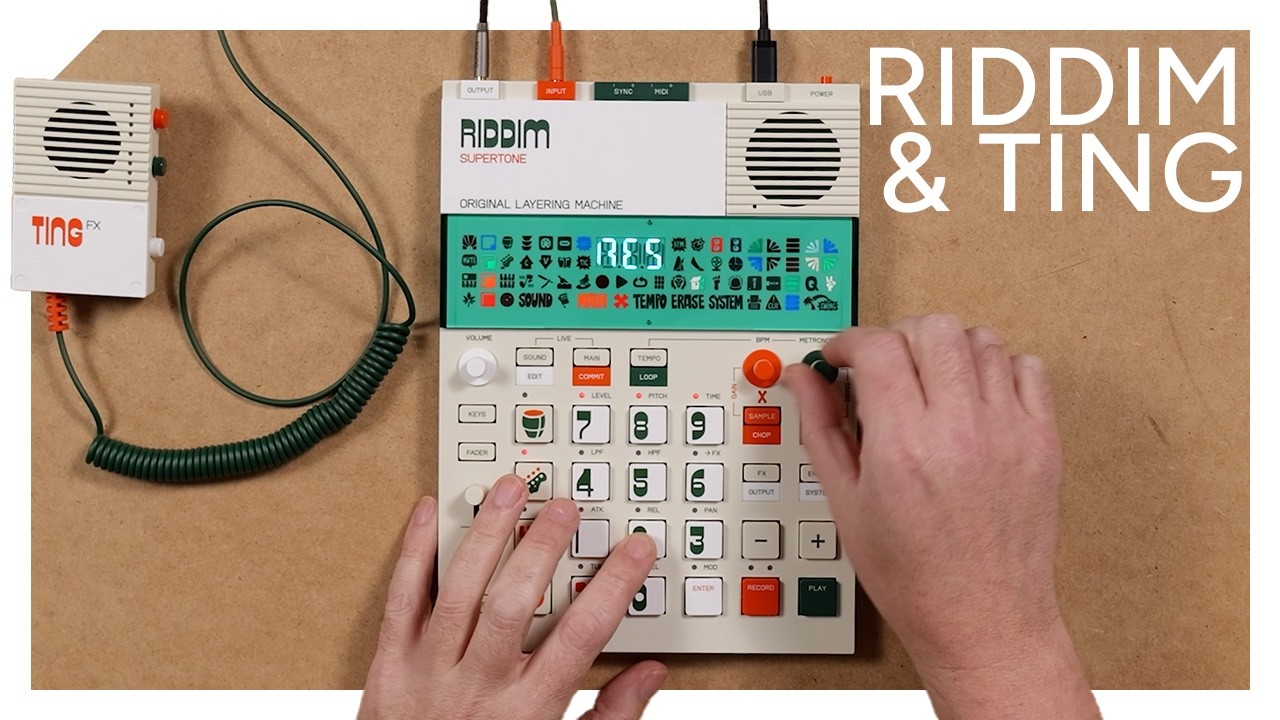
Riddim and Ting is a compelling package from TE, and the latest in its range of bigger, ‘not so pocket’ operators, large format desktop modules first kicked off with the EP-133 K.O. II sampler, itself a larger version of one of TE’s Pocket Operators.
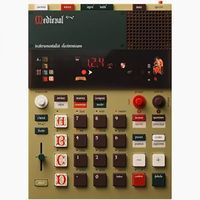
We’ve already had the first variation on that unit, the slightly bizarre and perhaps too-focussed Medieval EP-1320, a module aimed at time-travelling bards and court jesters – yes, really. But this latest EP combo promises to be a wider-ranging beast, so it should be more of a home run for TE. Let’s get them together, then, but do they feel alright? (Sorry.)

Performance
Think of EP-40 as a groovebox with a synth engine and sampling, and you won’t go far wrong. There are four parts to a Riddim project – Drums, Bass, Melodic and SFX – and you simply hit a project part button on the left-hand side, and audition sounds with the keys or change them by holding the +/- buttons.
There are 400 such sounds, including a ton of percussive hits through the first few banks, with bass and leads from location 400 onwards; as you go higher, you get effects, stabs, fills and loops.
Both the bass and lead sounds utilise Riddim’s on-board ‘Supertone’ subtractive synth engine, which is one of the draws of the machine over previous models in the range, so you get some proper beefy basses and head-tearing leads. Choose a sound you like and then hit the Keys button, and Riddim maps the chosen sound across the keys in a scale for you to play and record.

Within each project part, hitting a key might give you loops (of beats, basslines etc) – most often played on buttons 7, 8 and 9 – and single hits and effects on the rest of the keys. The parts are set up slightly differently, though, so you can, for example, only play one drum loop at any one time, but up to three melodic loops. Either way, this is a great way to get a feel for Riddim and to audition some varied sounds.
Better still, you get nine user-editable projects (although both website and manual state eight) already loaded in, which should be your first port of call. Hit play as soon as you enter the Live State mode, and you can audition a project with loops (new to this model), hits, synth sounds and more, all created by production royalty, including dancehall’s King Jammy, dub pioneers like Mad Professor, and singer/songwriters including Lisa Hyper and Etana.
These are all excellent, if perhaps somewhat ‘obvious’ on occasion, even sounding pretty good on Riddim’s not-so-large and not-so-powerful on-board speaker. Riddim might not be a mobile sound system capable of carrying Notting Hill’s carnival on its own, then, but it’s good enough to use for mobile song creation. You will just have to plug the unit into a proper sound system to enjoy it to the full, but it can certainly deliver; its range is superb and dynamic, the sirens as loud and proud as you could ask for, and all the beats, bass and leads are there for project creation across a variety of genres, not just the obvious ones.

There are plenty of vocal and other sound effects too, although EP-40’s sample mode lets you add more, replacing or adding to the existing presets and utilising Riddim’s 128MB storage (twice that of the original EP-133).
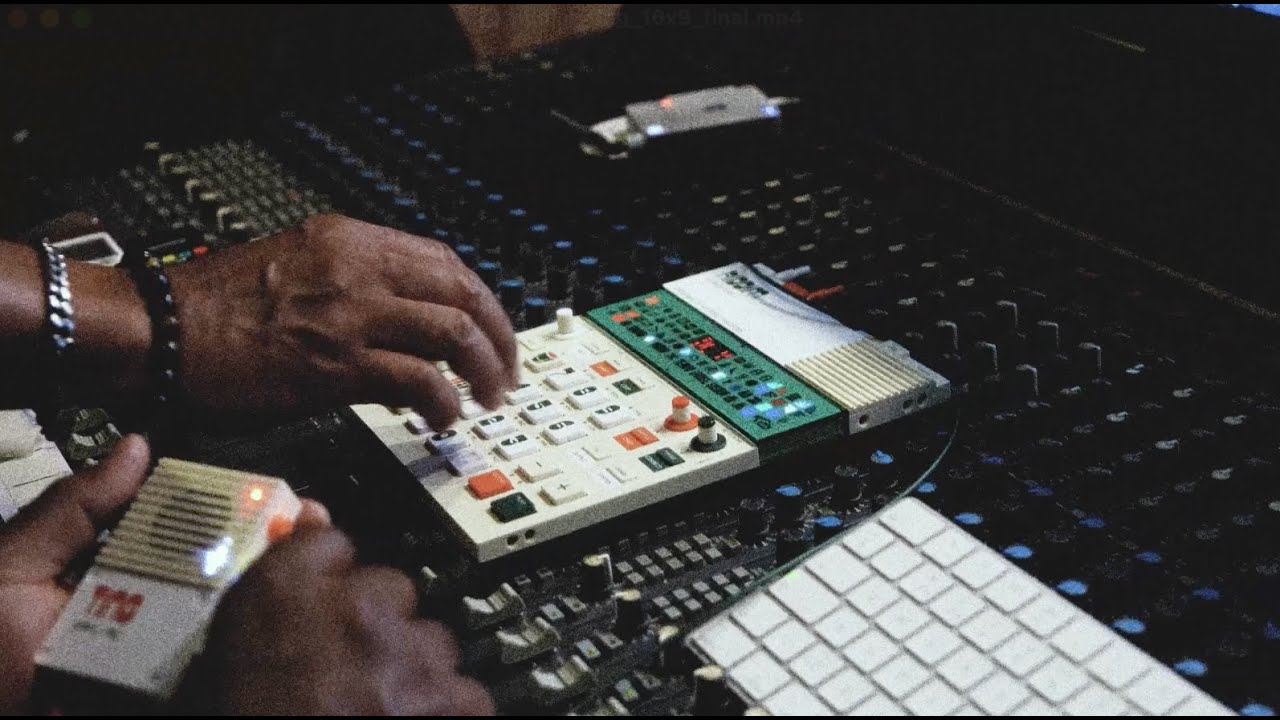
Here you can use the optional (but currently free) EP-2350 Ting microphone, which we’d say is an essential partner, plugging in and allowing you to transform your vocal, or any outside world sound, into something very dubby indeed. Not only can you use it to sample your voice, but also trigger up to four on-board samples and use Riddim’s on-board effects, which can also be selected via the mic.
And the effects section is where it gets just that little bit crazier, as it most certainly should. In these genres, the effects are as important as the initial sounds, and how your delays intertwine and evolve with the beats and bass are really where the magic happens, so much so that original producers would sprinkle effects from Space Echos and other delays in to result in mesmerising reggae tracks that would take on a life of their own.
With Riddim, you can select these different effects, either by triggering different effect sounds – sirens, squeals and plenty more – or by putting any sound through the on-board effects (7 main plus 12 punch-in) and controlling its level with the single fader on the left. Again, this is great fun for adding live effects on the fly, highlighting Riddim’s fantastic performance chops.

Verdict
It’s not all fabulous news – we did struggle with the operating system at first, as the learning curve is a little steep if you are a non-EP/OP/OPZ user. Proper old school producers might also baulk at the ease of song creation and the slick results – a criticism you can level at almost any piece of genre-specific music technology. Yes, this is perhaps a sanitised dub and reggae module, but feel free to filth up the results to make them more ‘authentic’ should you wish.
Overall, though, using Riddim and Ting is a very enjoyable experience. Unlike Medieval, this is a more flexible package that delivers everything it should in ways that only TE can. The operating system is easy once you get over that initial hurdle, and we found that you should perhaps simply enjoy the many rather marvellous and colourful icons around the screen as a light show rather than use them as guidance.

If dancehall, reggae and dub aren’t necessarily your ‘ting’, then Riddim also acts as a bridge to those worlds for newcomers, and you can very easily find yourself fitting its workflow, effects, beats, and some very solid low end into whatever genres you produce.
Surprisingly for Teenage Engineering, the price is reasonable, although there is some rather overpriced merch should you wish to splash out – we’ll take the £29 socks. EP-40 sounds great, and the EP-2350 mic is a stroke of genius, although that also makes it an essential addition in our books, so grab it free while you can to enjoy a fantastic partnership. As someone might have once said, this is the sound… of sirens.
Hands-on demos
teenage engineering

Alternatives
Specifications
Price | £299/$299 |
Key features | Sampler, sequencer, and composer with a subtractive synth engine • 400+ instrument sounds, and grid-synced loops from iconic reggae producers |
Sampling | frequency: 46 kHz / 16-bit • 12 stereo / 16 mono poly voices • 128MB system memory • 9 user-editable projects |
Effects | 7 main plus 12 punch-in |
Controls | pressure-sensitive keys and multifunctional fader |
Connections | stereo in/out, sync in/out, midi in/out, and USB-C |
Dimensions | 240 x 176 x 16 mm |
Contact |
Price | Currently free with EP-40 |
Key features | Lo-fi microphone (included free in launch offer) 4 replaceable samples to trigger Adjustable live effect parameters |
4 live voice effects | echo, echo+spring, pixie, robot |
Connection | line out (3.5 mm) |
Contact |

You must confirm your public display name before commenting
Please logout and then login again, you will then be prompted to enter your display name.