


The biggest selling album of all time was released in 1982 – Michael Jackson’s Thriller. But the biggest selling album in America that year was a rather unlikely hit – created by four progressive rock veterans who had come together in a new supergroup.
The group was Asia, and for drummer Carl Palmer it was his second such project after his success in the ’70s as one third of Emerson, Lake & Palmer.
Joining him in Asia were guitarist Steve Howe (of Yes), bassist/vocalist John Wetton (King Crimson, Roxy Music, etc) and keyboardist Geoff Downes (Yes, The Buggles).
In a new interview with MusicRadar, Carl Palmer recalls the formation of Asia, how he was not the first choice of drummer for the band, and how they wrote and recorded the song that became their breakthrough hit.

He begins by acknowledging the key roles played in Asia’s career by two senior figures at Geffen Records – the company’s founder and CEO David Geffen, and A&R executive John Kalodner, who was also instrumental in guiding successful comebacks in the ’80s for Aerosmith and Whitesnake.
“John Kalodner started out as a journalist in Philadelphia,” Palmer says. “John used to write really well about the bands that played at the Spectrum, the big 20,000 seater in Philadelphia, and his journalism was really meaningful, accurate, not gossip. He was somebody who knew about music. He wrote very well, and he got picked up by David Geffen, who was always looking for a new kind of talent.
“Kalodner said to Geffen, ‘The progressive rock circuit is pretty stagnant. They don’t play prog music on the radio anymore, unless it’s three o’clock in the morning. You don’t get it on drivetime anymore.’
“Kalodner was brought in because there was a change – MTV, VH1, all that stuff had started. Geffen knew that he could use MTV or whatever and he could break something big if they got it right.”
As Palmer understands it, the creation of Asia began in 1981 when Kalodner orchestrated a connection between John Wetton and Steve Howe.
“I think those two got together with the help of John Kalodner,” Palmer says, “because Kalodner was a big John Wetton fan. Wetton had been in King Crimson after Greg Lake. He’d also been in the band U.K., and Kalodner liked that.
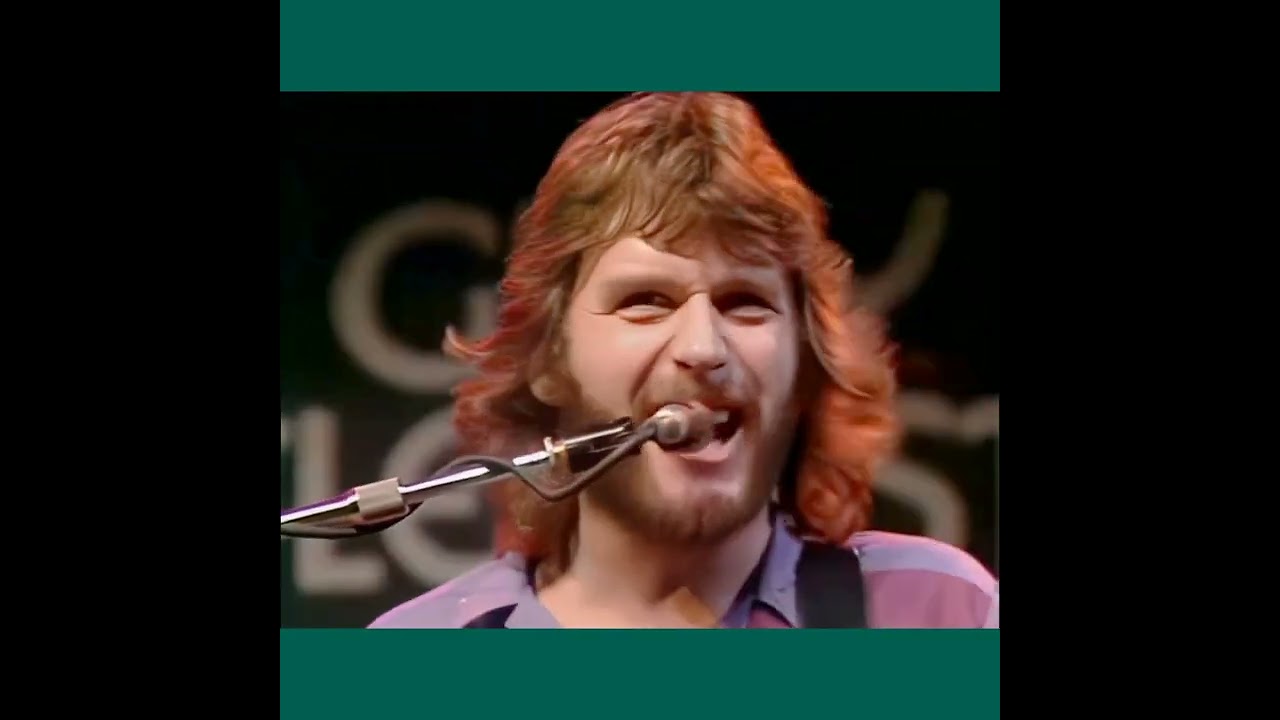
“Steve Howe got together with Wetton because Yes had kind of broken up, and then Kalodner said, ‘Let’s get a great drummer.’ Those was his words. They got Simon Phillips. Simon came in and played. And I don’t know why that didn’t work out, but Kalodner said, ‘We need Carl Palmer!’ So I come in and play and it’s great.”
He continues: “At that point it was the three of us, so we started rehearsing as a three-piece band. But at the place where we were rehearsing in London, down the hallway was Geoff Downes playing with Trevor Horn in a band called The Buggles, who’d had that big hit with Video Killed The Radio Star.
“Steve Howe said, ‘Hey, we had this guy in Yes for a little while with Trevor Horn singing. He’s a good keyboard player. Why don't we go and get him?’ I said, ’Yeah!’
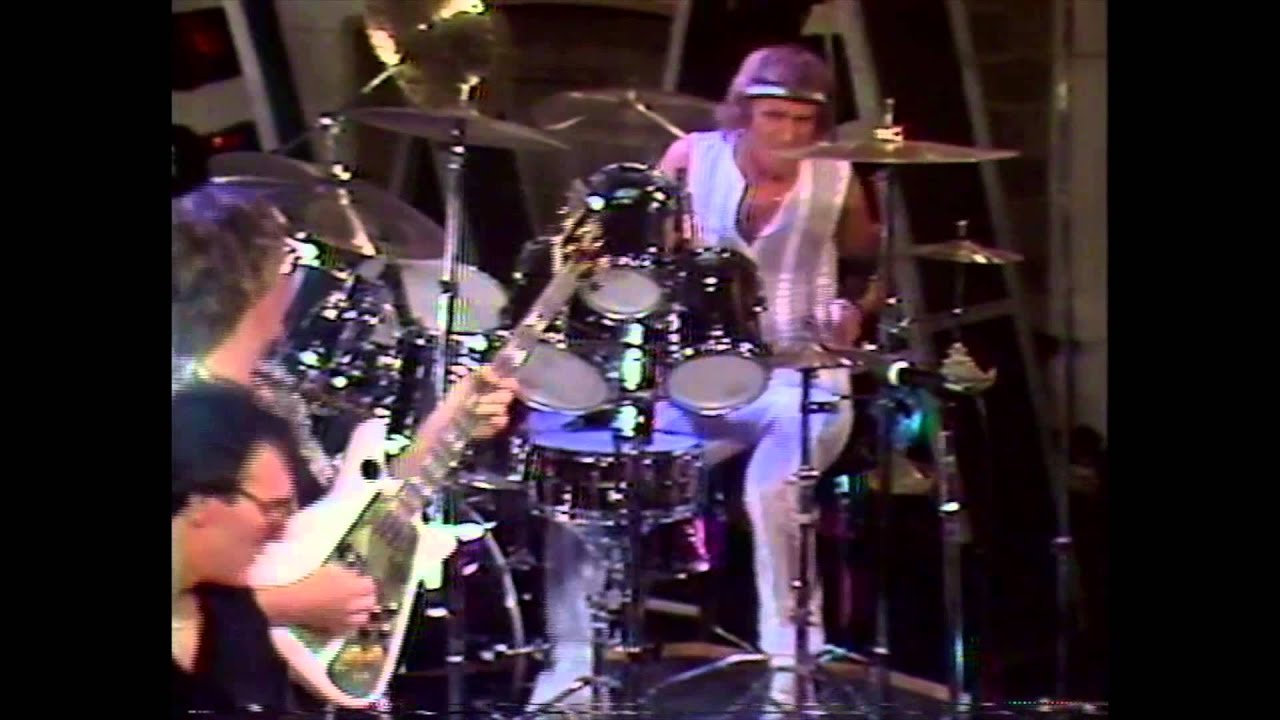
“I’d seen Yes at Madison Square Gardens with Steve Howe and Geoff Downes and Trevor Horn. I flew over to see the concert because I thought I’d see what that was all about. I said, ‘Let’s try it with Geoff.’ So we hauled his keyboards up the hallway after Trevor had left one night, and we started rehearsing – and the rest is history. That’s how it came together.”
Downes turned out to be a major songwriter within the group. In partnership with Wetton he crafted all three of the songs that became singles from the Asia’s debut album – Heat Of The Moment, Only Time Will Tell and Sole Survivor.
In an interview with Classic Rock magazine, Steve Howe described two tracks, Time Again and Wildest Dreams, as “very progressive”.
But as Palmer says now, David Geffen wanted to hear songs that could appeal to a mainstream audience.
Palmer states: “Geffen said, ‘I’m going to find it hard to get the band on radio unless you’re prepared to cross over a little bit.’ And we decided that we would have a go at that.
“We still had some prog in there, like Time Again and Wildest Dreams, and Sole Survivor was a bit on the heavy side. But we needed a kind of pop song.”

John Wetton had something in mind, but it wasn’t originally a pop song.
Palmer recalls: “Heat Of The Moment was the last song for the album, and I think it was recorded at about two o’clock in the morning. It was one of those classic moments.
“John had said, ‘I’ve got an idea.’ We said, ‘Well, what is it?’ It was late and I was thinking, ‘I’m hungry and I’m tired and I want to go to bed.’
“But John was clever. After telling us he’d got an idea he said, ‘Could we just lay a rhythm track down for this?’ I said, ‘Well, once you put the drums down, if you change anything you’ve got to record the whole thing again.’ Because once the drums go down, it’s hard to edit them. You can, but it’s better to do it in a proper arrangement that’s got conviction behind it and you know that’s the one.
“Anyway, long story short, he says, ’It’s a country song that used to be in 3/4, and I think we can play it in a straight 4/4. Could we have a go?’ I said, ‘That sounds really interesting – but are you sure you know where you’re going with this?’ He said, ‘I got it’ – and he did. He’d got it all mapped out, and we started playing it.
“I said, ‘Steve, you need to play some rhythm guitar behind this.’ ‘Geoff, play some chords.’ ‘And John, give me a guide vocal. Give me the format.’
“He wrote the format down. You know, verse, verse, chorus, chorus, middle eight, out choruses, verse, verse, out, end choruses. And we laid it down, I think, in about an hour. The following day we came in and finished it off, and that was it. Job done.”
Palmer smiles at the memory: “John was very clever because nobody overplayed on it because everybody was tired, so he he got basically very straight, simple parts, which the song actually needed. Very clever.”
In 2011 John Wetton talked about the creation of Heat Of The Moment on the Kickin’ It Old School blog.
He stated: “The lyrics are an abject apology for my dreadful behaviour towards a particular woman – the woman I would eventually marry, but divorce 10 years later.”
Wetton described the time signature as 6/8 and explained: “When Geoff and I started writing together, we moved the time signatures around, and Heat Of The Moment emerged.”

In 2026, Geoff Downes spoke to Penny Black Music about his contribution to the debut Asia album.
“I was used to short songs,” he said. “Melodic, short pop songs. The band still retained the depth and musicality, so it wasn’t straight-ahead pop. We kept a good line between not-selling-out, but having that accessibility. More of a commercial level. That’s one of the things that was our strength.”
Downes also pointed to a surprising influence in Palmer’s drumming in the intro to Heat Of The Moment.
“That was inspired by Phil Spector,” Downes said. “That drumbeat with a fat snare with a tambourine, and Carl really embraced that idea.”
What Palmer himself recalls with great satisfaction is the immediate success that Asia enjoyed in 1982 as Heat Of The Moment shot to No 4 on the Billboard Hot 100, powering the album all the way to No 1.
“We made the videos, went on to MTV, and we got a hit right out the box with Heat Of The Moment,” Palmer says. “The album was number one for nine weeks in America.
“It was,” he recalls, “an incredibly exciting time.”
