


Anyone who witnessed U2’s performance at Live Aid on Saturday 13 July 1985 will remember that their setlist did not go to plan.
In keeping with Bob Geldof’s stipulation that all artists perform no longer than 17 minutes (“Don’t get clever – just play the hits” as he bluntly warned Freddie Mercury of Queen), the band had chosen three songs to play – Sunday Bloody Sunday, Bad and Pride (In The Name Of Love).
Pride was their biggest hit at the time, and Live Aid was a golden opportunity to close their set with a song that the colossal TV audience would remember. But they never got around to playing it.
Instead, Bono went on walkabout to commune with the crowd – making an arduous clamber down from the stage to hug and slowly dance with a female member of the audience, 15 year-old Kal Khalique, who he suspected was being crushed against the front barrier by the surging crowd.
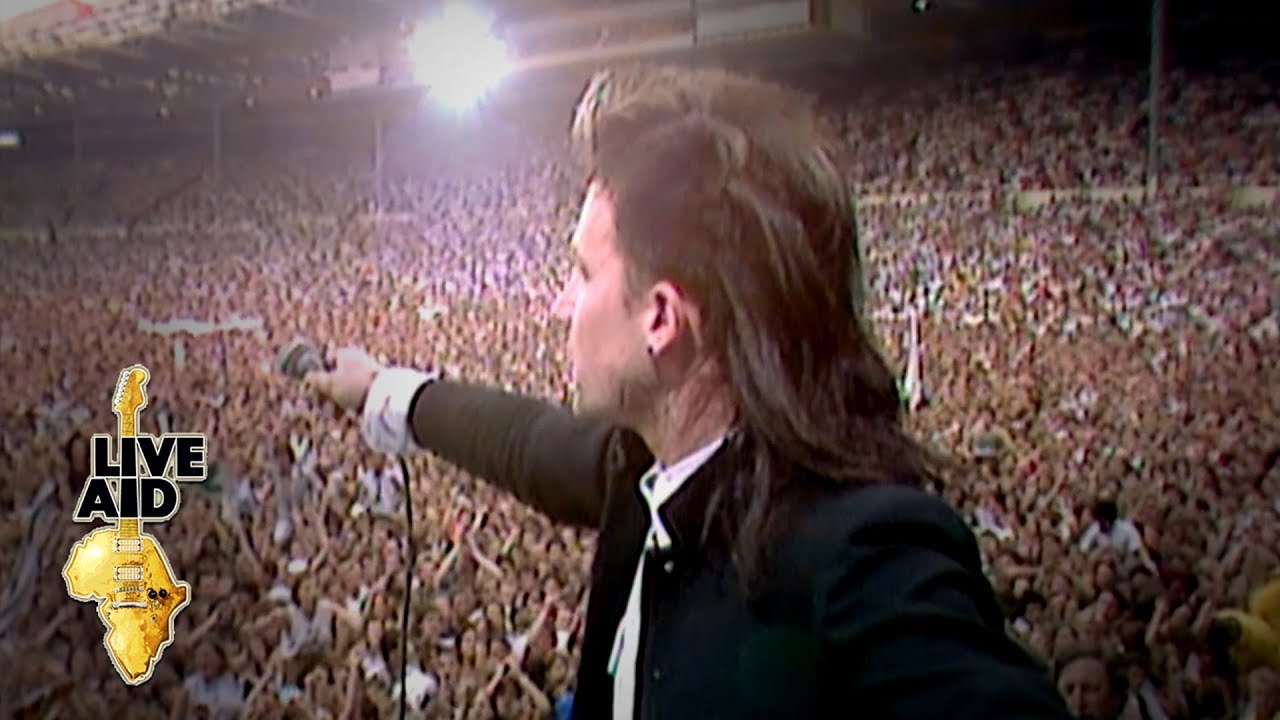
This meant that U2’s second and final song was an impromptu 12-minute version of the song Bad, from their latest album The Unforgettable Fire. Over the course of the song, Bono would ad lib snippets from the songs Satellite Of Love and Take A Walk On The Wild Side by Lou Reed, as well as Ruby Tuesday and Sympathy For The Devil by the Rolling Stones.
The band were reportedly furious that they had to scrap their performance of Pride (In The Name Of Love) and an argument allegedly broke out in their dressing room. Bono flew home to Ireland with his wife Ali, convinced he had blown it big time. “It was a great day but I thought I had fucked it up,” he told Rolling Stone.
But in the days that followed it became clear that U2’s performance of Bad was being viewed as one of the emotional high points of Live Aid. The themes of suffering and vulnerability that run through the song were particularly powerful in the broader context of Live Aid’s appeal for human compassion.
“It really took us by surprise when people started talking about U2 as one of the noteworthy performances of the day,” The Edge told Rolling Stone. “I thought they were joking, I really thought we were crap. But looking back, as I did a week later, I started to see what it was. It was the sense of real, total jeopardy, which is always very exciting for a live event, and Bono’s complete determination to make physical contact with the crowd and eventually getting there after two minutes of struggling over barriers. I think there was something about the effort he had to put in to do it that somehow made it even more powerful.”
Bono’s actions may have been perceived as indulgent and narcissistic by some, but that day he built an emotional connection with the audience and the 1.9 billion people watching across the world. Bad was the song that made it happen.
It remains one of U2’s most emotionally intense songs, and the band’s performance of it that day was a major turning point in their career. It introduced them to a colossal audience and paved the way for global mainstream stardom.
The song began as an improvised guitar riff during a jam session while U2 were living and recording at Slane Castle in County Meath in 1984, working on The Unforgettable Fire, their fourth studio album. The band had appointed Brian Eno and Daniel Lanois as producers and they in turn helped create a more ambient sound.
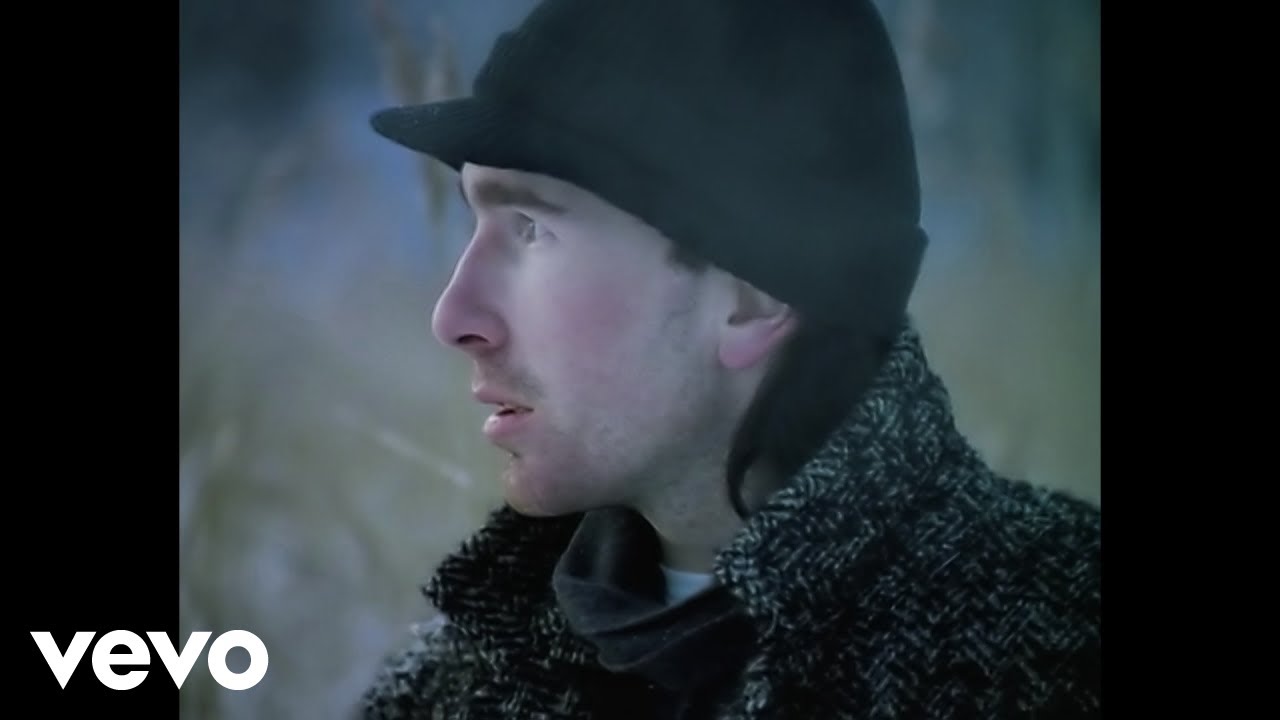
The results were radically different from their previous album, War.
“We were looking for something that was a bit more serious, more arty,” said Adam Clayton in the 2016 biography, U2 On U2, co-authored by the band and music journalist Neil McCormick.
Bono wrote the lyrics to Bad about heroin addiction, which was a devastating crisis in Dublin in the late-’70s and early-’80s. He specifically wrote the track about his friend Andy ‘Guck’ Rowen, who had turned to heroin after being traumatised by witnessing the 1974 Dublin and Monaghan bombings.
For a long time, Bono didn’t specifically name Rowen, simply saying that it was written about a friend. But in later years he did. On 26 July 2011, at the final US show of U2’s 360° Tour at Heinz Field in Pittsburgh, Bono paused before performing Bad, to deliver a direct tribute to Rowen, who was in the audience that night. “This is for a very special man, who is here in your city, who grew up on Cedarwood Road. We wrote this song about him and we play it for him tonight.”
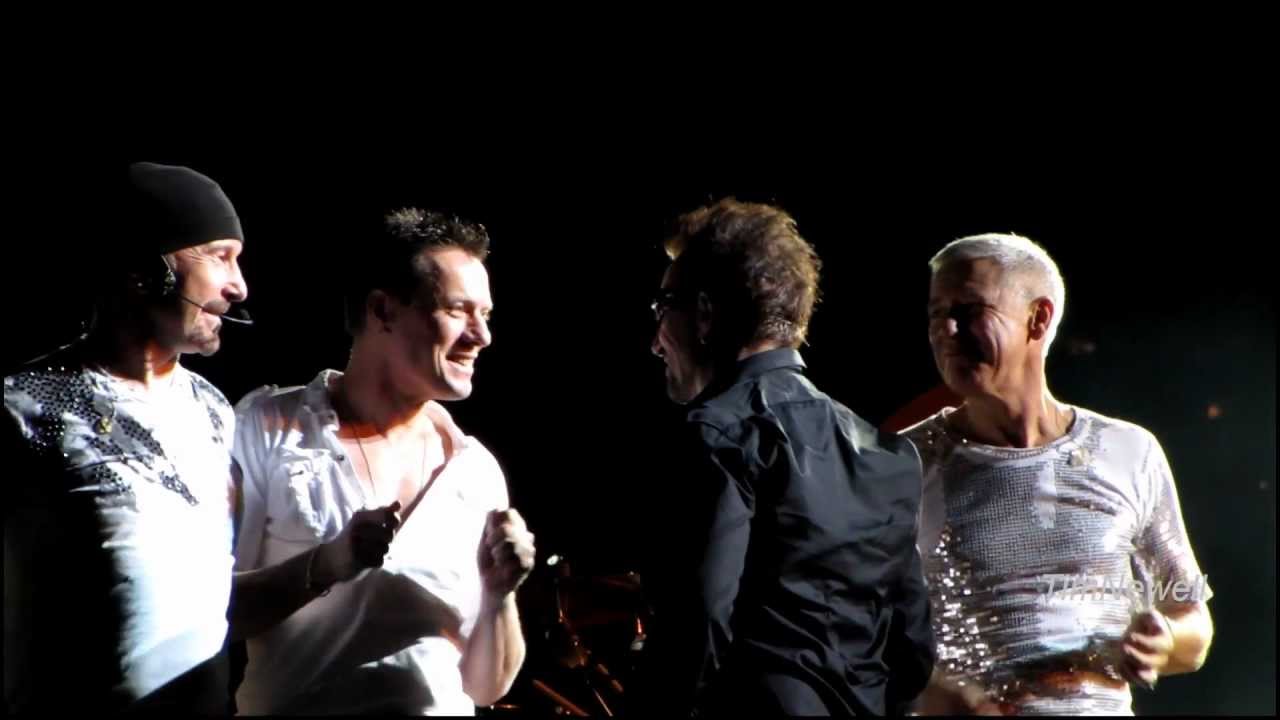
Bono has said that the song explores themes of surrender, isolation and personal addiction. “If you twist and tune away,” it begins, “If you tear yourself in two again/If I could, yes I would/If I could, I would/Let it go/Surrender/Dislocate.”
In the biography U2 On U2, Bono talks about watching teenagers fall victim to the heroin epidemic in Dublin. “They gave up everything they held sacred to this drug,” he explained. “I tried to describe that with the song, Bad, what it was like to feel that rush, to feel that elation, and then to go on to the nod, the awful sleep that comes with that drug, and then scream, ‘I'm wide awake, I’m wide awake, I’m not sleeping!’ I can see what’s going on.”
Instrumentally, the song was developed by the band improvising on the riff that the Edge had developed. “Some of the songs had no structure to them until we started playing,” The Edge told Guitar Player magazine in 1985. “We actually improvised them as we were working. Bad is an example.”
Producer Brian Eno reportedly used an Oberheim DSX sequencer to add the distinctive sequencer arpeggios, which give the song an enigmatic heft.
Bad is essentially an anthem in the key of A major, simply built around variations of the A and D chords. It’s been described as one of the Edge’s “ultimate delay” songs. According to Amnesta.net he used his Korg SDD-3000 digital delay as his primary modulated digital delay, with a secondary shorter delay, set to a dotted eighth-note rhythm and this was sent to a separate amp.
Opinions vary on which guitar’s and amp’s he used for the studio recording of Bad. While he certainly went on to primarily use his Stratocaster when playing the song live, some of the studio tracking on The Unforgettable Fire was reportedly done on his 1976 Gibson Explorer and a 1971 Telecaster.
As for his choice of amp, a vintage Vox AC30 was central to the Edge’s sound. Across the album, he also increasingly used various muting techniques.
“I was experimenting a lot with damping my guitar strings, using felt or gaffer tape over the strings near the bridge to give zero sustain,” he told Guitar Player magazine in 1985. “Using echo, I found some remarkable effects.”
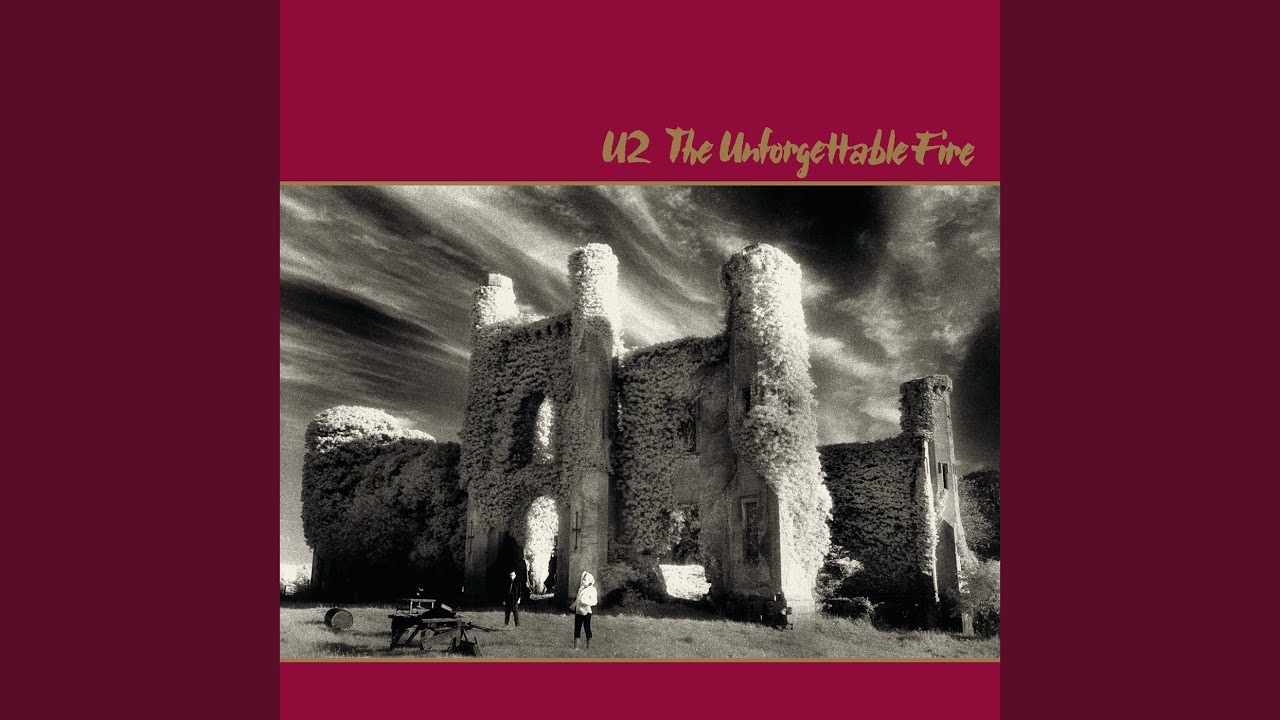
The basic track of Bad was recorded at Slane Castle in just three takes, but the studio recording of the song on The Unforgettable Fire was panned by some critics as lacklustre, with Rolling Stone magazine describing it as “forgettably muddy”.
In many ways, Bad was a song that only really came to fruition once the band began playing it live. There was a sense that the song had not been sufficiently developed and only when it was performed live did it begin to show its true greatness.
“That is potentially a truly great song… if I had finished it,” Bono said of the studio version of the song in an interview with Rolling Stone magazine. “It was very difficult to do, almost an impossible collision of cultures for us. It was a different kind of songwriting, like Philip Glass meets Astral Weeks, Van Morrison crossed with German electronica. You have sequences which are rigid and metronomic and then you have a bass which is improvising all the way, and the voice too. We were struggling so hard to find that song.”
While the studio version was stilted, on tour, U2 would play it obsessively in soundchecks until the song really came to life. Which is why the version of the song that would become most played on radio was not the studio version, but a live performance, recorded on 12 November 1984 at the NEC in Birmingham, England. This was released on the 1985 four-track EP Wide Awake In America, a curious title given that the EP’s two live tracks were recorded in England and the two studio tracks were recorded in Ireland.
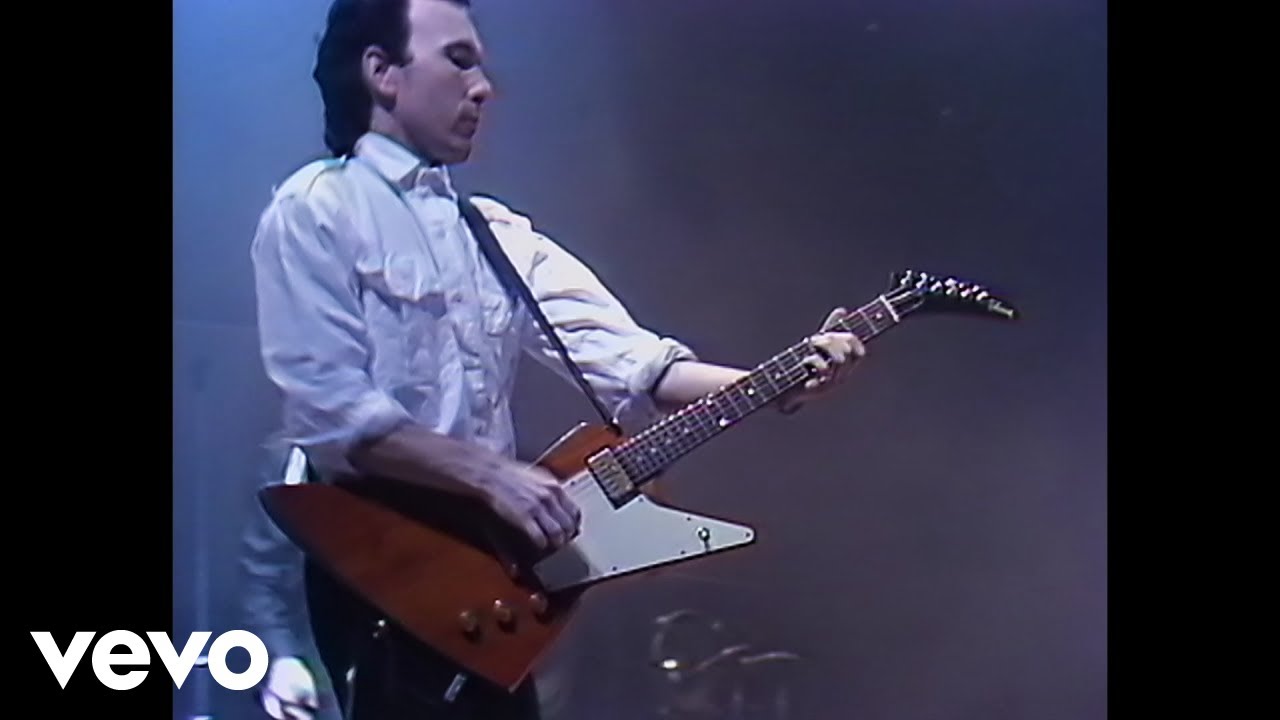
It’s not a great EP but the version of Bad that is featured on it has a fire and intensity that the studio version lacks.
In the years that followed, four other versions of the song would be released. An edit of the studio version from Unforgettable Fire appears on the band’s 1998 greatest hits compilation, The Best Of 1980-1990. It is the only non-single to appear on the compilation, with the exception of a hidden version of the song October.
A live version of Bad from U2's 1987 The Joshua Tree tour appears in the documentary Rattle And Hum and a version of the song from the band’s 2001 Elevation: Live From Boston Tour, along with a snippet from the song 40, appears in the concert film of that tour.
![[2001] - Bad [Elevation: Live In Boston] - U2 - YouTube](https://img.youtube.com/vi/jkwIQCoawxs/maxresdefault.jpg)
Another version of Bad is featured on the live album Live From The Point Depot, from the 2004 digital box set The Complete U2.
Bad became a central song in U2’s setlist and a fan favourite. And it kept evolving, a work-in-progress with a life well beyond the studio and with seemingly no definitive finish.
“In a way, I do finish it every night, live,” said Bono in the biography U2 By U2. “I change the lyrics. Poets have no problem with revising their work. Songs shouldn't be set in stone. If they are any good, they are living, breathing organisms.”
