
MusicRadar MusicRadar The No.1 website for musicians
UK EditionUK US EditionUS AU EditionAustralia SG EditionSingapore
Sign in
  • View Profile
  • Sign out
  • Artist news
  • Music Gear Reviews
  • Synths
  • Guitars
  • Controllers
  • Drums
  • Keyboards & Pianos
  • Guitar Amps
  • Software & Apps
  • More
    • Recording
    • DJ Gear
    • Acoustic Guitars
    • Bass Guitars
    • Tech
    • Tutorials
    • Reviews
    • Buying Guides
    • About us
Don't miss these
The Power Station
Artists “The most expensive bit of drumming in history”: When stars of Duran Duran and Chic formed a decadent ’80s supergroup
Lily and Blue
Artists We speak with Lily Allen’s co-songwriter and executive producer about the extraordinary fast-paced creation of West End Girl
trevor horn
Artists "It was the best-sounding piece of kit ever – but they were so up themselves": Trevor Horn on the pioneering synth that defined the sound of Welcome to the Pleasuredome
Status Quo
Artists “I remember saying to Clapton, ‘You try playing that one riff for eight minutes!’”: The secret to Status Quo's riff power
Close up of Bono with a cigar
Singles And Albums “Suddenly we were presented with this gift”: How One saved Achtung Baby and saved U2
Justin Hawkins
Artists “He wanted it to sound tinny, so he literally put the mic in a tin”: When The Darkness teamed up with Queen’s producer
Neil Finn
Artists “I played it with the band and it sounded like a bag of…”: How Neil Finn created Crowded House's classic hit
Aerosmith and Yungblud
Artists “You can say, ‘This isn’t real rock ‘n’ roll.’ Or look at it another way”: Joe Perry on Aerosmith's collab with Yungblud
Gwen Stefani
Artists “I ended up changing the whole song because Tony broke up with me”: How Gwen Stefani's heartbreak inspired a No.1 hit
Rod Stewart
Artists “We wrote the biggest-selling single that Rod ever had, and it took us an hour”: Rod Stewart's controversial disco hit
Linda Perry
Artists “I went to the label and said, ‘This song sucks. This is not the song I wrote.’”: The war over a ’90s anthem
Def Leppard
Artists “I said, ‘Sorry, boys – you can’t turn this chorus down!’”: How Def Leppard created a mega-hit song in 10 days
Bon Jovi
Artists “When I brought up the talk box, everybody in the band laughed at me”: How Bon Jovi created their signature rock anthem
Interpol
Artists How Interpol fought for success and lit a fire in indie rock with their best single
Paul McCartney
Artists “It's a sad song because it's all about the unattainable”: The ballad that sparked the breakup of The Beatles
More
  • "The most expensive bit of drumming in history”
  • JoBo x Fuchs
  • Radiohead Daydreaming
  • Vanilla Fudge
  • 95k+ free music samples
  1. Artists

Europe's Joey Tempest: how I wrote The Final Countdown

News
By Amit Sharma published 27 July 2016

"We actually called it The Final Breakdown at one point!"

When you purchase through links on our site, we may earn an affiliate commission. Here’s how it works.

Introduction

Introduction

Joey Tempest was just 17 years old when he wrote Europe’s biggest hit, The Final Countdown.

The song, from the 1986 album of the same name, would go on to change his life dramatically, transforming the relatively unknown Swedish rockers into one of the hottest bands in the world.

Admittedly, it’s the kind of term that gets thrown around a fair bit in this day and age, but few others could say they were number 1 in 25 countries across the globe at one single moment. Their dreams had finally come true.

“It started with me borrowing a Korg Polysix keyboard from [friend and not before long, bandmate] Mic Michaeli, who went to the same school,” begins the Europe frontman, sat in the basement of Gibson’s London HQ on a warm summer’s day.

I write lyrics by a piano, because it’s a rich instrument; you don’t need a whole band with you

“I think it helped me write differently. I thought it could bring another dimension to our future. We only wanted one guitar player, but when the solos came in, it sometimes felt a bit empty, so we put pads in there, even on the first few albums.

“I write lyrics by a piano, because it’s a rich instrument; you don’t need a whole band with you. At the beginning of the '80s, there was the big influx of keyboards, so I borrowed one and came up with it in a night.”

It was in that moment of inspiration, Tempest let his creative juices flow, penning in just a matter of minutes the bare bones of the song that would make him a multi-millionaire for the rest of his life.
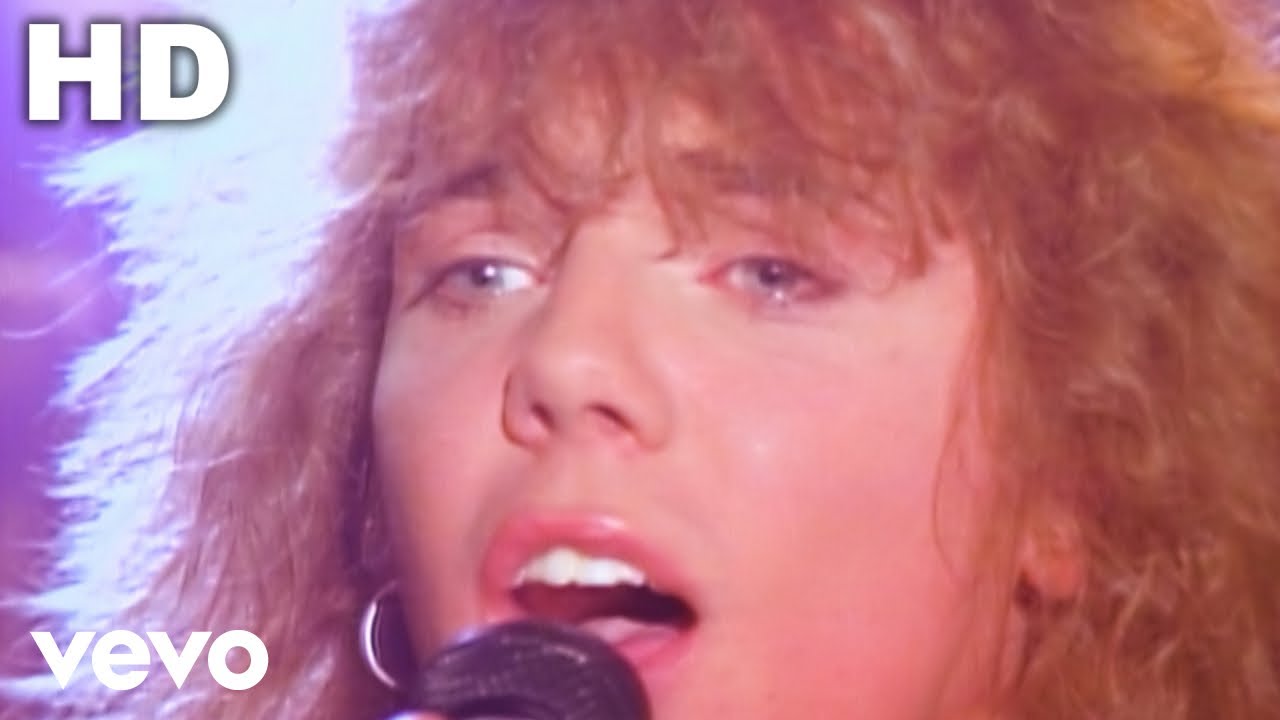
The song wrote itself, and you could probably say it was the most productive night of his career, in that sense.

“I found this sweeping sound; it felt special to me,” grins Tempest. “So then I did a one-minute demo of it, with no verses, no nothing - just this hook building up.

“I was still in college, and the teachers always told me off for not concentrating enough. I’d be rehearsing with John and the others at night and partying, going to see bands like Thin Lizzy, Whitesnake or whoever came to town.

“I guess I was a bit aloof - it was a three-year machine technique college course, so it was far removed from music. My mum wanted me to go to that place, and I did okay, but it wasn’t really my thing.”

Page 1 of 4
Page 1 of 4
Alienation

Alienation

The one-minute demo, which exists only in the band’s sacred vaults, was the dream of a single teenager - even the guitar solo motif, played by John Norum, came from Tempest’s suggestion of a “Ritchie Blackmore triplet-kinda-thing”.

It was all quickly put together in basement floor of his family’s two-floor house in Stockholm, which Tempest had turned into his own makeshift recording studio, kitted out with acoustics, synths and a Tascam eight-track.

Even at the tender age of seven, Tempest was recording his favourite songs from the television set, purely because if he didn’t, he’d probably never hear them again - “it’s a bit different these days,” he laughs.

I played it to the guys and everybody was surprised, because we were supposed to be a guitar band

And though some articles would suggest Tempest had a hard time selling the hit single to his bandmates, most notably guitarist Norum, the truth is they were all excited by an idea that was wildly inventive, playful and different for the rock scene of its time.

“I played it to the guys and everybody was surprised, because we were supposed to be a guitar band,” admits Tempest.

“While this song was keyboard-driven, we all loved Rush and other things that were more keyboard-based. It wasn’t completely alien; actually, it was kinda cool.

“So, it was only later when John was more negative [about the track]. He actually came to my basement to do the solo on the demo, so he was part of it early on and had no complaints then!

“I got into piano through Elton John and guitar stuff through David Bowie – Space Oddity was one of the first singles I bought, and I was mesmerised by the lyrical content about leaving Earth, which is what inspired The Final Countdown.

“I didn’t have a title for it; I just played the song loud over and over again to myself, improvising stood by the microphone. And then the title came, and inspired by Space Oddity, I thought of what it would be about: leaving ground, leaving Earth, the Earth is spent, we’re going somewhere else, ha ha!”

Page 2 of 4
Page 2 of 4
Record achievement

Record achievement

While it would undoubtedly become the song that put them on the map, it would be foolish would dismiss Europe as one-hit wonders. Their career has been long and fruitful indeed, the quintet still filling the bigger venues in whichever town they’re in.

Even The Final Countdown album itself has much more to it than just a chart-topping title track, its three other singles - Rock The Night, Carrie and Cherokee - proving this was more than just a lucky strike.

“All four singles were huge in America at the time,” continues Tempest.

“We had four songs in the top 40 getting constant radio play! So we are all really excited to play the album in its entirety - some songs it feels like we haven’t played... ever! Love Chaser, not much. Time Has Come, a bit but not much.
“Without the title track, we still would have been a very British-sounding alternative guitar band, but things would have taken a different course. We might not have been as big, necessarily…

“You know, for the final version, we needed 11 keyboards used together to get that! It could have fallen apart right there - the wrong sound or something cheesier and it wouldn’t have worked. We were arguing over the tempo of the song in the studio. We actually called it The Final Breakdown at one point!

“There were a few takes that were slower and straight, more AC/DC-sounding, but it didn’t bounce as much. So I was determined to keep that Iron Maiden gallop thing, ha ha!”

Page 3 of 4
Page 3 of 4
At the top of his voice

At the top of his voice

Now 52 years old - though his youthful charm and radiant skin would suggest otherwise - Tempest is one of those golden-throated singers whose voices continues to sound better and better.

The only techniques he’s ever needed are the ones he was taught during the making of The Final Countdown, when he came down with a bug just as he was about to track his vocals.

“I’ve been lucky,” he modestly shrugs. “At the time, I found a vocal coach in Stockholm who taught me how to build up my vocal power, and that’s always been there if I need it.

“There’s nothing really that different about my voice these days; it’s slightly rounder and huskier, while it was bendy and thinner when I was younger. That’s what happens with singers. Listen to Rival Sons - their singer [Jay Buchanan] has that bendy thing, and he’s amazing at it… acrobat singing!

“Singers have a really tough job. I always avoid air conditioning; I remember Dio saying he would gaffa-tape all the air conditioning in the rooms he stayed in, because you can’t call down and ask them to turn it down… it’s always the whole building.

“I could never party as much as the others; alcohol dries the voice out. Luckily, though, my voice has held up fine.”

Europe play the following Final Countdown 30th Anniversary shows in Europe.

8 November – Sweden – Stockholm, Cirkus
10 November – Belgium – Brussels, Ancienne Belgique
11 November – Germany – Cologne, E-Werk
12 November – UK – London, Roundhouse
14 November – Holland – Utrecht, Musikzentrum Vredenburg (MCV)
15 November – France – Paris, Olympia
16 November – Switzerland – Zurich, Volkshaus
17 November – Switzerland – Lausanne, Metropole
19 November – Italy – Rome, Orion
20 November – Italy – Milan, Alcatraz

Page 4 of 4
Page 4 of 4
Amit Sharma
Amit Sharma

Amit has been writing for titles like Total Guitar, MusicRadar and Guitar World for over a decade and counts Richie Kotzen, Guthrie Govan and Jeff Beck among his primary influences. He's interviewed everyone from Ozzy Osbourne and Lemmy to Slash and Jimmy Page, and once even traded solos with a member of Slayer on a track released internationally. As a session guitarist, he's played alongside members of Judas Priest and Uriah Heep in London ensemble Metalworks, as well as handling lead guitars for legends like Glen Matlock (Sex Pistols, The Faces) and Stu Hamm (Steve Vai, Joe Satriani, G3).

Read more
Don Felder on stage with the Eagles in 1979
“I wrote it so that Joe and I could play even harder than on Hotel California”: Don Felder's heavy 'lost' Eagles song
 
 
Klaus Meine of The Scorpions, 1991
“The whistling was a result of me having no guitar": The making of The Scorpions' Wind Of Change
 
 
Bon Jovi
“When I brought up the talk box, everybody in the band laughed at me”: How Bon Jovi created their signature rock anthem
 
 
Neil Finn
“I played it with the band and it sounded like a bag of…”: How Neil Finn created Crowded House's classic hit
 
 
Davey Johnstone and Elton John are back-to-back as they perform live, with Johnstone playing his Captain Fantastic Les Paul Custom
Davey Johnstone on the making of Elton John’s 1975 masterpiece, Captain Fantastic And The Brown Dirt Cowboy
 
 
Steve Porcaro
Steve Porcaro on the rise, fall and resurgence of Toto, working with Michael Jackson and his new solo album
 
 
Latest in Artists
Eric Clapton and Sheryl Crow perform at Eric Clapton's Crossroads Guitar Festival 2007 held at Toyota Park on July 28, 2007 in Bridgeview, Illinois.
"They put it on hold so nobody else can record it. But he didn’t actually record it. That was when Don Henley said, ‘You need to quit giving your songs away’”: Sheryl Crow says that she once wrote a song for Eric Clapton that never saw the light of day
 
 
Steve Cropper in 2007
“My mom said, ‘I’ll lend you a quarter if you become a guitar player.’ I think I did!”: Steve Cropper dies aged 84
 
 
Adrian Belew with the Fender Stratocaster that he and Seymour Duncan relic'd in the back garden
Adrian Belew on how he and Seymour Duncan made one of the first relic’d guitars
 
 
teed
How TEED went back to basics with a bedroom set-up and a borrowed synth for third album Always With Me
 
 
Josh Freese
“People said, ‘Hey, I saw you’re on that Avril Lavigne record.’ I went, ‘Nah!'”: The drummer who’s played on 400 albums
 
 
Flea of the Red Hot Chili Peppers performs during a concert at Federation Square on April 11, 2007 in Melbourne, Australia
Flea teases his first solo album with a seven minute jazz rave single
 
 
Latest in News
oxi
"We didn't want to make just another controller": OXI Instruments' E16 is a sleek and portable MIDI controller that's more powerful than it looks
 
 
Serato and AlphaTheta launch Slab for Serato Studio
AlphaTheta and Serato launch Slab, the first hardware controller for Serato Studio
 
 
EVH Gear Hypersonic 5150III 6L6: The new all-digital modelling combo offers the same stylings and super-hot tone as its all-tube predecessor but is 16kg lighter
EVH Gear turns “holy grail” Eddie Van Halen amp Hypersonic with super-lightweight 5150III 6L6 digital modelling combo
 
 
The Electro-Harmonix ABRAMS100 is a compact, guitar amp head with 100-watts, 3-band EQ, effects loop and bright switch, and it has a yellow control panel and black dials.
Electro-Harmonix presents 100-watts of solid-state power in a compact guitar amp head weighing just 2.5lbs
 
 
The Compulsion Drive is Brian Wampler's take on on of his favourite drive pedals, the Fulltone OCD, but it's quite a different proposition with an expanded control setup.
Brian Wampler just reimagined a bona fide modern classic with The Compulsion Drive – but is this OCD-inspired dirt pedal an overdrive, distortion or both?
 
 
Cyber Monday deals badge over a neon EQ
These 58 Black Friday and Cyber Monday deals for musicians are still live - but they'll be gone soon


MusicRadar is part of Future plc, an international media group and leading digital publisher. Visit our corporate site.

Add as a preferred source on Google
  • About Us
  • Contact Future's experts
  • Terms and conditions
  • Privacy policy
  • Cookies policy
  • Advertise with us
  • Accessibility Statement
  • Careers

© Future Publishing Limited Quay House, The Ambury, Bath BA1 1UA. All rights reserved. England and Wales company registration number 2008885.

Please login or signup to comment

Please wait...